A place without a photograph
There are rooms you could no longer draw from memory but would recognize with your eyes closed. A grandmother's hallway, with its polished wood and coats drying near the door. The kitchen of a first apartment, where coffee always arrived before daylight. A hotel bathroom on a trip you thought you had forgotten. Their details blur, but something of their atmosphere remains.
Scent gives those ordinary places a particular kind of presence. It doesn't ask you to recall the whole story. Sometimes all that returns is a feeling: being expected, being far from home, having nowhere else you needed to be. That can be enough.
The things people leave behind
We tend to think of someone's fragrance as the perfume they choose. But the scent we associate with a person is usually a collection of smaller things. Their soap, the laundry hanging in their room, a leather bag, the tea they drink, the weather that follows them inside.
A borrowed sweater carries more than one note. It carries the memory of an evening, the temperature of a room, the easy familiarity of another person's belongings. This is why the same perfume can mean entirely different things to different people. One person smells cedar. Another remembers a coat hanging beside the front door.
Weather has a place in it
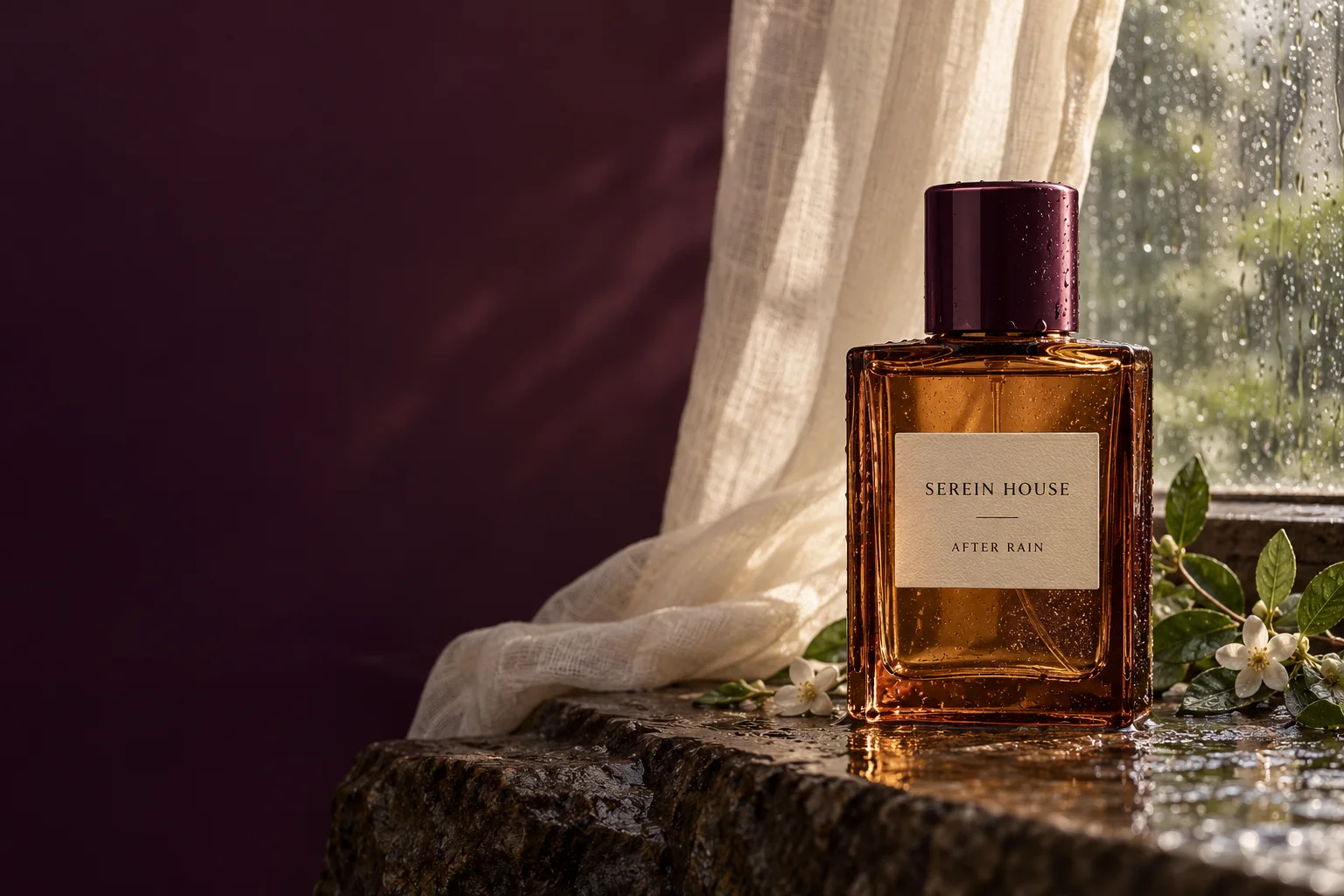
Rain is never quite the same smell everywhere. On a city pavement it seems dark and mineral. In a garden it arrives with leaves and soil. Beside the sea, it mixes with salt and the wood of a damp windowsill. We remember these combinations without necessarily naming them.
Travel often leaves a similar impression. You may forget which street you walked down, but remember warm bread escaping a doorway, sunscreen on your wrists, or the cool interior of a shop after a hot afternoon. A familiar note encountered years later can make that day feel briefly close again.
The ordinary becomes personal
Not every scent memory belongs to a great occasion. Most gather quietly through repetition. The hand wash used throughout a winter. The candle lit while dinner cooked. The fragrance worn on the train each morning. Nothing remarkable needed to happen for these things to become part of your life.
There is something reassuring about that. We don't have to arrange every moment to make it worth remembering. Familiar routines do some of that work on their own. A fragrance can become meaningful simply because we keep returning to it, through days that otherwise seem unexceptional.
Choosing what stays
When trying a new fragrance, it can help to leave the list of notes aside for a moment. Notice what it suggests instead. Is it a place you know? A texture, a temperature, a time of day? There is no correct answer, and no need to turn every impression into a story.
Wear it while doing something ordinary. Make breakfast, read, go for a walk. Let it sit beside the rest of your day. Some compositions feel interesting at first and then become distant. Others seem almost too quiet until you catch them again on a sleeve and realize you have been thinking about them.
Those are often the scents we keep. Not because they describe us perfectly, but because they leave room for our own associations. Over time, the perfume and the life around it become harder to separate. What began as a bottle on a shelf becomes a small record of where we have been.